1 (800) 584-0324


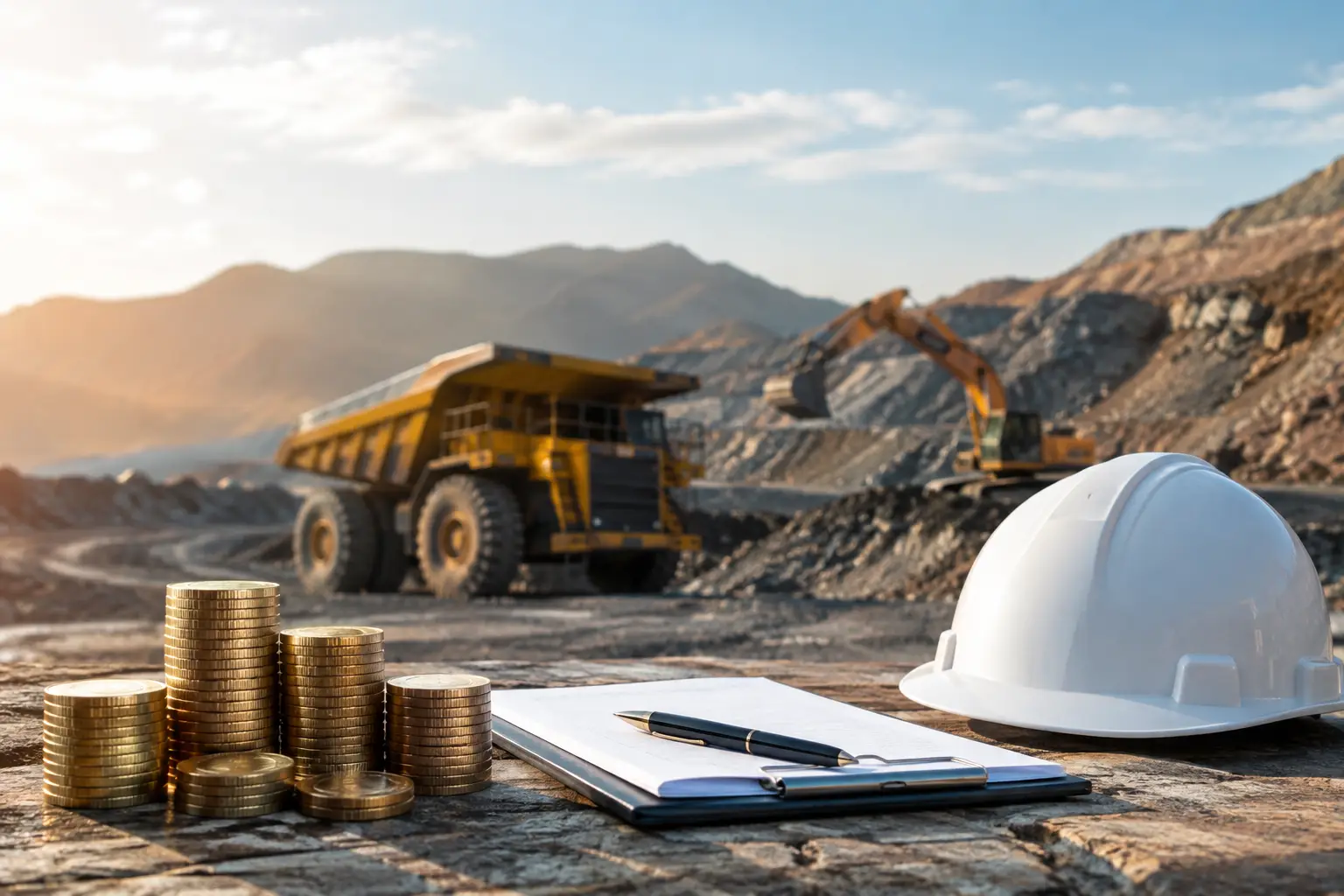
A mining company can have a strong reserve report, experienced operators, and clear demand for its output, yet still face a capital gap at exactly the wrong moment. The best financing options for mining are rarely a single loan product. They are a capital structure built around the company’s project stage, asset base, revenue profile, and tolerance for dilution and covenants.
For mine owners, CFOs, and sponsors, the objective is not simply obtaining the largest available commitment. It is securing capital that arrives when needed, matches the useful life of the asset, and leaves enough operating flexibility to manage commodity price cycles, permitting timelines, and production variability.
Why Mining Financing Requires a Different Approach
Mining is capital-intensive long before it becomes cash-flow positive. Exploration, drilling, feasibility studies, land development, permitting, processing infrastructure, fleet purchases, and reclamation obligations can all demand capital. At the same time, many conventional lenders remain cautious about geological risk, commodity concentration, environmental exposure, and long project development periods.
That does not mean financing is unavailable. It means the structure must reflect the facts of the business. A producing mine with contracted offtake and a proven equipment fleet presents a very different credit profile than a development-stage project awaiting final permits. The right financing strategy separates financeable assets and predictable cash flows from the risks that may need equity, sponsor capital, or more flexible private credit.
The Best Financing Options for Mining by Need
Equipment Financing for Fleet and Processing Assets
Equipment financing is often one of the most practical ways to preserve working capital while acquiring or upgrading high-value assets. Haul trucks, excavators, drilling equipment, crushing systems, conveyors, loaders, generators, and processing machinery may all support a dedicated financing facility when they have identifiable collateral value.
The primary advantage is alignment. A long-lived asset can be financed over a term that better reflects its economic use, rather than being paid for entirely from operating cash. This can be especially valuable when a company needs to replace aging equipment, expand capacity, or improve safety and production efficiency.
Terms depend on equipment age, condition, resale value, maintenance history, and the borrower’s financial strength. New equipment generally receives the most favorable advance rates. Used or specialized equipment may still be financeable, but lenders may require larger down payments, shorter terms, or additional collateral support.
Asset-Based Lending for Working Capital
Asset-based lending can give established mining operators a revolving source of liquidity secured by eligible business assets. Depending on the lender and transaction, the borrowing base may include receivables, inventory, equipment, and sometimes other hard assets.
This approach can be effective for companies with revenue but uneven cash conversion cycles. For example, a mine may incur substantial labor, fuel, maintenance, and logistics costs before a concentrate shipment is invoiced and collected. An asset-based line can help bridge that timing gap without forcing the business to use term debt for recurring operating needs.
The trade-off is reporting. Asset-based facilities typically require regular borrowing-base certificates, collateral monitoring, and lender controls over eligible assets. For a business with disciplined finance operations, that structure can be a reasonable exchange for greater access to liquidity than an unsecured bank line.
Invoice Factoring and Receivables Financing
When customer invoices are the clearest source of collateral, invoice factoring or receivables financing can convert outstanding receivables into immediate cash. This can be particularly useful for contractors, service providers, equipment suppliers, and producing mining companies selling to creditworthy counterparties.
Factoring is not a replacement for long-term project capital. It is a cash-flow tool. It works best when invoices are valid, customers have strong payment histories, and the company needs to fund payroll, supplies, freight, or short-cycle operating costs while waiting for payment.
Finance leaders should compare the all-in cost, customer notification requirements, reserve terms, and recourse provisions. A lower stated rate can be less attractive if the facility imposes restrictive operational conditions or excludes a large share of receivables.
Term Loans and Private Credit for Expansion
Term loans are commonly used for expansion projects, plant improvements, reserve development, acquisitions, refinancing, and other defined capital needs. Traditional banks may offer attractive pricing to established operators with stable cash flow and strong collateral. However, private credit providers can be more flexible when the company needs faster execution, larger leverage, customized amortization, or financing that a bank’s credit policy will not support.
For a producing mine, a term loan may be sized against historical earnings, asset values, or projected debt service capacity. For a growth project, lenders may focus more heavily on feasibility studies, technical reports, management experience, sponsor support, permits, offtake arrangements, and sensitivity analyses around commodity prices and production assumptions.
Private credit is often more expensive than bank debt, but pricing should not be evaluated in isolation. A facility that closes quickly, accommodates a ramp-up period, and permits strategic capital expenditures can create more value than a lower-cost loan with terms that constrain the operation.
Project Finance and Structured Capital
Larger mine development projects may require a project-finance or structured-capital approach. These transactions typically rely on the anticipated cash flow of a specific project and involve extensive diligence around reserves, engineering, permits, environmental obligations, construction budgets, and offtake agreements.
Project financing can support substantial capital requirements, but it is document-intensive and generally takes longer to arrange than an equipment loan or working-capital line. Lenders and investors may require completion guarantees, cost-overrun protections, debt service reserves, hedging arrangements, and detailed controls over project cash flow.
For the right project, this structure can limit recourse to the parent company and align repayment with expected project performance. For an earlier-stage company, however, the documentation and certainty requirements may make sponsor equity or a staged financing plan more realistic.
Sale-Leasebacks to Release Capital From Owned Assets
A sale-leaseback allows a mining business to sell owned equipment, real estate, or certain infrastructure assets to a financing partner and lease them back under an agreed term. The company retains operational use while converting an illiquid asset into cash.
This option can be compelling when valuable equipment is owned free and clear but capital is needed for development, debt reduction, an acquisition, or a production expansion. It may also provide an alternative to adding conventional secured debt.
The business must weigh the benefit of immediate liquidity against the long-term lease obligation. A sale-leaseback is most effective when proceeds are directed toward a clear value-creating use, not merely used to mask a recurring operating shortfall.
Building a Capital Stack That Can Withstand Volatility
Mining companies often benefit from combining financing products rather than forcing every need into one facility. Equipment financing may fund a new fleet. An asset-based line may support working capital. A term loan or structured facility may fund expansion. Equity or sponsor capital may absorb the highest-risk development costs.
This layered approach helps prevent a mismatch between capital and purpose. Using short-term working-capital debt to finance a multiyear infrastructure project can create unnecessary refinancing pressure. Using expensive equity for equipment with dependable collateral value can create avoidable dilution.
A resilient structure also considers downside scenarios. Management should model lower commodity prices, delayed production, higher fuel or labor costs, slower collections, and capex overruns. Lenders will test these assumptions, and leadership should do the same before accepting repayment terms, covenants, or guarantees.
What Lenders Will Want to See
The strongest financing process begins well before lender outreach. Mining businesses should be prepared to present current financial statements, tax returns, debt schedules, equipment lists, production data, customer or offtake agreements, and a clear use-of-proceeds plan. Development-stage businesses should also organize technical reports, feasibility studies, permit status, reserve information, environmental documentation, and a realistic project timeline.
Credibility matters as much as documentation. Lenders want to understand how management will respond if production misses plan or prices decline. A direct explanation of risks, paired with practical mitigation steps, is more persuasive than overly optimistic projections.
Agile Solutions helps mining businesses evaluate multiple capital paths, compare lender terms, and build financing structures around both immediate needs and long-range growth plans. With access to a broad network of capital partners, companies can pursue solutions that fit their assets and operating realities rather than accept the first available offer.
The right financing decision should give your operation room to execute. When capital is matched to the mine’s stage, assets, and cash-flow cycle, it becomes more than funding – it becomes a practical tool for stronger operations and more confident growth.