1 (800) 584-0324


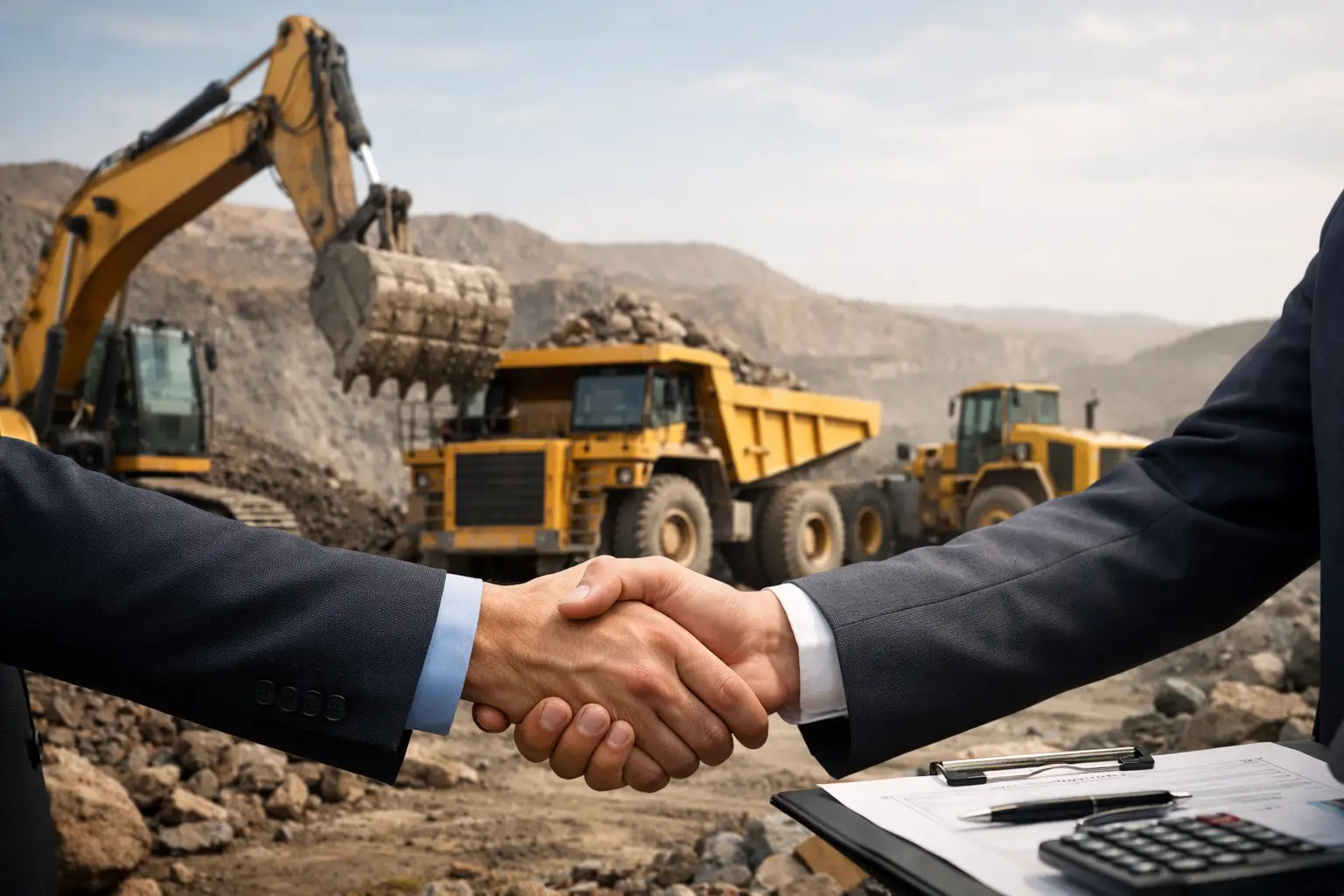
A delayed shovel delivery, an aging haul truck fleet, or a sudden need to expand production can force mining companies into fast capital decisions. That is where mining equipment financing solutions become more than a lending product. They become a strategic tool for protecting liquidity, matching debt to asset life, and keeping operations moving without overcommitting working capital.
For mining operators, contractors, and executive teams, equipment purchases rarely sit in isolation. A new loader may support a contract award. A replacement drill rig may be tied to safety, uptime, or output targets. Processing equipment may be part of a broader expansion plan that also affects labor, fuel, maintenance, and site development costs. Financing has to reflect that reality. The right structure is not simply the one with the lowest advertised rate. It is the one that fits production cycles, collateral profiles, and the company’s wider capital strategy.
What mining equipment financing solutions actually cover
Mining equipment financing solutions can support a wide range of hard assets, from heavy mobile equipment to fixed processing systems. That may include excavators, haul trucks, loaders, crushers, conveyors, screening systems, drill rigs, generators, pumps, and site support equipment. In many cases, financing can also extend to used equipment, refurbished machinery, and ancillary costs such as delivery, installation, and in some structures, soft costs tied to deployment.
That breadth matters because mining businesses often acquire equipment in phases rather than in one clean transaction. A company may need two pieces of mobile equipment now, then add support units six months later after output ramps. Another may be refinancing equipment already on the books to free up cash for exploration, staffing, or acquisitions. Financing should be flexible enough to support both new purchases and broader balance sheet objectives.
Why standard lending often falls short in mining
Mining is capital-intensive, cyclical, and operationally complex. Traditional lenders do not always have the appetite or underwriting framework to evaluate a mining business properly, especially when collateral includes specialized equipment, remote operations, or variable revenue tied to commodity pricing and contract performance.
That does not mean funding is unavailable. It means structure matters. A lender with experience in industrial and heavy equipment finance may underwrite the deal very differently than a generalist bank. They are more likely to understand equipment resale markets, utilization rates, maintenance records, and how asset productivity supports repayment capacity.
This is also where timing becomes critical. Mining companies often cannot wait through a long bank credit process while a seller, contractor, or project timeline moves ahead. A tailored financing approach can shorten decision cycles and create more practical options when speed matters.
Common structures for mining equipment financing solutions
The best structure depends on what is being financed, how the equipment will be used, and what the business needs to preserve on its balance sheet.
Equipment loans
A traditional equipment loan is often the most straightforward option when a company wants to own the asset at closing and spread the cost over time. The equipment itself serves as primary collateral, which can make this structure attractive for businesses that want to preserve other assets. Loan terms are usually shaped around expected useful life, equipment type, and borrower strength.
This approach works well for long-life assets with predictable utilization. It may be less ideal when equipment turnover is expected or when the business wants to avoid a large upfront down payment.
Equipment leases
Leasing can provide more flexibility, especially when preserving cash is a priority. Depending on the lease type, companies may benefit from lower initial outlays, fixed payments, and end-of-term options that align with expected equipment use. For some operators, this is a practical fit for fleets that need periodic refreshes or for equipment deployed on defined contract terms.
Leasing is not automatically cheaper than borrowing. The value is often in cash flow management and flexibility, not just pricing. That distinction matters when evaluating offers.
Sale-leaseback transactions
If a business already owns valuable equipment, a sale-leaseback can convert that equity into working capital while allowing continued use of the assets. This can be especially useful when a mining company needs liquidity for expansion, payroll support, contract mobilization, or debt restructuring.
The trade-off is clear. You gain immediate cash, but you add a payment obligation tied to assets you previously owned outright. For the right company, that can be a disciplined way to fund growth without raising more expensive capital elsewhere.
Asset-based structures and hybrid solutions
In more complex situations, equipment financing may be paired with asset-based lending, working capital facilities, or refinancing. That is often the case when a business is scaling quickly, managing uneven receivables, or balancing several capital needs at once. A hybrid structure can create room for both equipment acquisition and operating flexibility, rather than forcing one need to crowd out the other.
How lenders evaluate mining equipment deals
Strong approvals usually come down to more than credit scores or headline revenue. Lenders want to understand the business behind the equipment.
They will typically assess the type, age, condition, and resale value of the equipment, along with the borrower’s financial statements, cash flow profile, debt obligations, and operating history. In mining, they may also look closely at customer concentration, contract strength, reserve or project characteristics, maintenance practices, and whether the assets are deployed in stable, revenue-producing operations.
Used equipment can absolutely be financeable, but documentation matters more. A well-maintained, high-demand unit with clear service records may be easier to finance than a newer but highly specialized asset with a narrow resale market.
Lenders also weigh how the payment schedule aligns with the business. Monthly amortization may work for one borrower, while another needs seasonal flexibility or a customized ramp based on production timing. That is why a one-size-fits-all term sheet can create problems later, even if it looks attractive upfront.
Choosing the right financing partner
For executive teams, the key question is not only whether capital is available. It is whether the financing partner can structure around the realities of the business.
A capable advisor or financing partner should understand heavy equipment values, transaction speed, and lender fit. They should also be able to compare multiple capital sources, explain trade-offs clearly, and structure financing in a way that supports growth instead of creating avoidable pressure on cash flow.
That is especially important in mining, where a single transaction may involve equipment purchases, vendor timing, title considerations, delivery schedules, and coordination with broader operating needs. In those situations, execution matters just as much as pricing.
Agile Solutions works with businesses that need this kind of tailored capital strategy, particularly in complex and capital-intensive industries where conventional financing options may be too rigid or too slow.
What to prepare before pursuing mining equipment financing solutions
Well-prepared borrowers generally get better results. That does not just mean faster approvals. It often leads to stronger terms, cleaner underwriting, and fewer surprises during closing.
At a minimum, companies should be ready with recent financial statements, equipment quotes or invoices, a current debt schedule, and a clear explanation of how the equipment supports operations or growth. For larger or more specialized requests, it also helps to provide utilization assumptions, maintenance records, contract details, and any operational context that supports repayment capacity.
Management should also be clear internally about priorities. Is the goal to minimize monthly payments, preserve cash at closing, finance used equipment, refinance existing assets, or support a broader expansion? Those objectives shape the right structure. Without that clarity, it is easy to compare offers on rate alone and miss the bigger picture.
The real advantage of a tailored structure
The strongest mining equipment financing solutions do not just help a company buy machinery. They help leadership allocate capital more intelligently. When debt terms are matched to asset life, when liquidity is preserved for operations, and when financing is aligned with production and contract realities, equipment becomes easier to scale without putting unnecessary strain on the business.
There is always a balance to strike. The lowest-cost option may require a larger down payment. The fastest option may carry a higher rate. The most flexible structure may not be the simplest one to document. Those are not flaws in the process. They are the practical trade-offs that come with building capital solutions around real operating conditions.
For mining companies planning their next equipment purchase, expansion phase, or liquidity strategy, financing should be treated as part of operational planning, not an afterthought. The right structure gives you room to move when opportunities appear, and room to breathe when conditions tighten. That kind of flexibility is often what separates growth that is sustainable from growth that is merely expensive.