1 (800) 584-0324


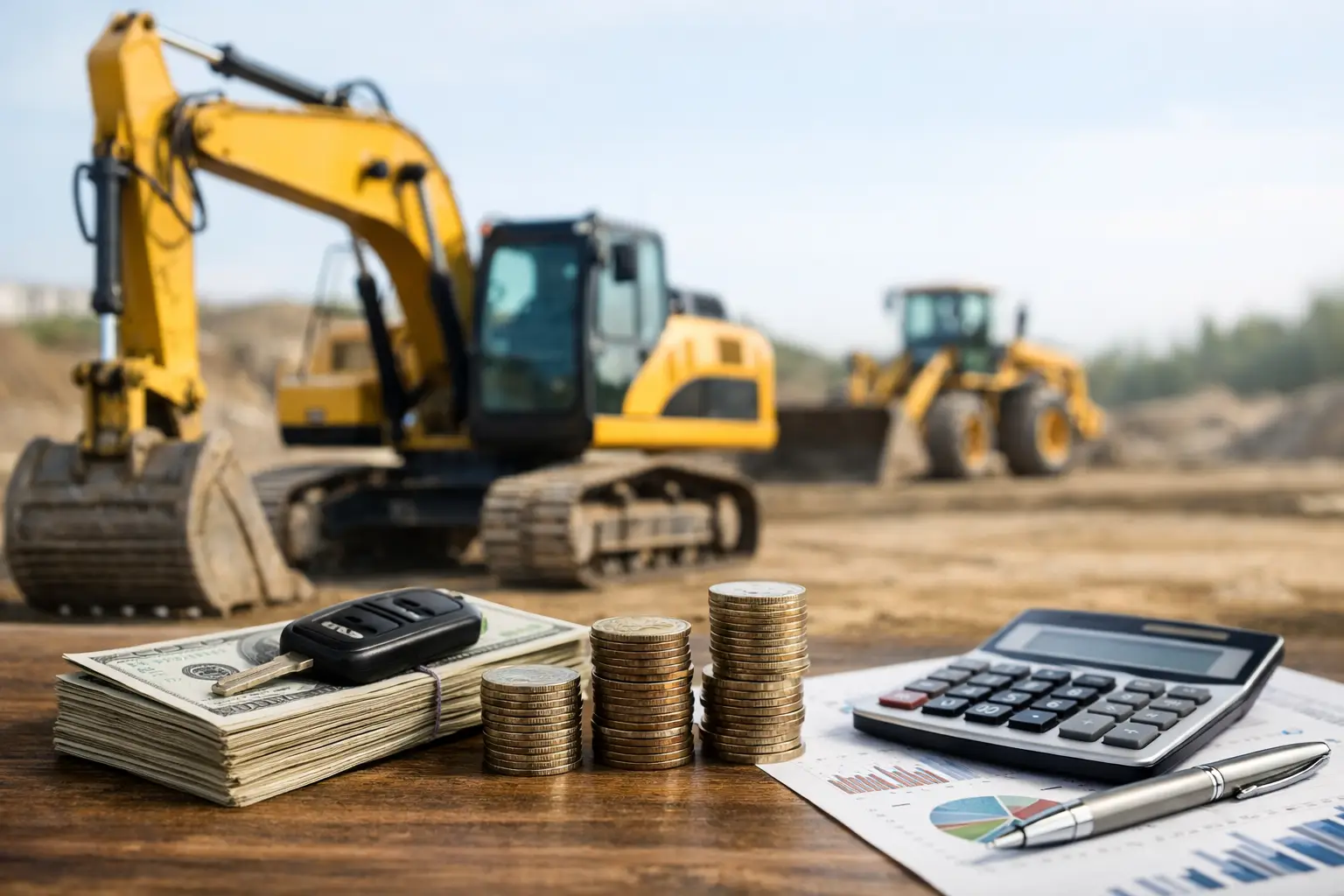
A new excavator, crane, paver, or fleet of compact equipment can create revenue quickly, but it can also put substantial pressure on working capital before the first project payment arrives. The right construction equipment financing options help contractors acquire productive assets without draining the cash needed for payroll, materials, mobilization, and bid opportunities.
For construction leaders, the decision is not simply whether to finance. It is how to structure capital around equipment life, project backlog, seasonal cash flow, existing debt, and future growth plans. A low monthly payment can be useful, but it may not be the best choice if it increases total cost, creates restrictive covenants, or leaves the company without flexibility when the next opportunity appears.
Construction Equipment Financing Options at a Glance
Most contractors will evaluate one of four core structures: equipment term loans, finance leases, operating leases, and asset-based financing. Each has a different effect on ownership, balance-sheet treatment, payment structure, and long-term cost.
An equipment term loan is often the most direct path for a company that intends to own an asset for much of its useful life. The lender funds the purchase, the equipment serves as collateral, and the borrower makes scheduled principal and interest payments. Once the loan is paid, the company owns the equipment free and clear.
A finance lease, sometimes called a capital lease, is designed for businesses that expect to keep the machine at the end of the term. Payments may be structured around a nominal purchase option, a fixed buyout, or a residual amount due at maturity. It can provide ownership-like economics while preserving cash at closing.
An operating lease is better suited to equipment with a shorter economic cycle, uncertain utilization, or rapid technology changes. The contractor generally returns, renews, or purchases the equipment at the end of the term. This approach can reduce upfront investment, though it may cost more over time than ownership for heavily utilized assets.
Asset-based financing can be valuable when equipment is only part of a larger capital need. A lender may structure a facility around machinery, receivables, inventory, or other eligible assets. For an established contractor with a growing backlog, this can support both equipment purchases and the operating liquidity required to perform larger contracts.
Start With the Equipment’s Revenue Profile
The most effective structure begins with a practical question: how will this machine earn its keep?
A specialized piece of equipment assigned to a signed, multi-year project may justify a longer term and higher advance rate because its utilization and revenue source are easier to forecast. Conversely, a machine purchased ahead of an uncertain bid pipeline may call for more flexibility, a lower payment commitment, or a lease structure that limits residual-value exposure.
Consider the expected useful life of the asset, not just its manufacturer warranty. A late-model dozer with strong resale demand may support a different financing profile than highly specialized foundation equipment that has a limited secondary market. Lenders care about collateral value, but executives should care equally about the period in which the asset will generate dependable margin.
Payment timing matters as well. Construction revenue is rarely smooth. Retainage, weather delays, approval cycles, and owner payment terms can create uneven cash flow even in profitable companies. Monthly payments may be appropriate for a contractor with recurring service work, while seasonal, quarterly, deferred, or step-up payments may better match a business that performs most of its work during defined periods.
Equipment Loans: Best When Ownership Is the Goal
Equipment loans usually fit contractors purchasing assets they expect to operate for years. Terms commonly align with the equipment’s age, condition, expected useful life, and resale value. Newer assets typically qualify for more favorable terms than older or highly specialized equipment, although well-maintained used equipment can still be financeable.
The primary advantage is straightforward: the company builds equity in an asset it intends to keep. Interest expense may also be deductible, subject to a company’s tax position and advice from its tax professionals. The trade-off is that ownership brings maintenance, depreciation, and resale risk.
For contractors with strong balance sheets and established banking relationships, a conventional bank loan may offer an attractive rate. Yet the lowest advertised rate is not the whole story. Banks can require stronger financial covenants, broader collateral support, personal guarantees, or a longer approval process than a specialty equipment lender. When timing is critical, certainty of execution can carry real value.
Leasing: Useful for Flexibility and Asset Rotation
Leasing can be a strategic choice rather than a fallback. It is particularly useful when a contractor wants to preserve borrowing capacity for acquisitions, working capital, bonding support, or a larger fleet expansion.
A lease may reduce the upfront cash requirement and allow the company to align payments with anticipated utilization. It can also be attractive for equipment that becomes obsolete quickly or requires frequent upgrades. For example, a contractor expanding into a new service line may prefer to lease certain assets until utilization patterns are proven.
The key is to examine the end-of-term obligation closely. A lower payment may depend on a substantial residual payment, return conditions, mileage or usage restrictions, or a purchase obligation that changes the economics of the deal. Finance leaders should compare total contractual cost, not just the monthly amount.
Sale-Leasebacks: Turn Existing Equipment Into Liquidity
A sale-leaseback allows a company to sell equipment it already owns to a financing partner and lease it back for continued use. The contractor keeps the machines in operation while converting equity tied up in equipment into working capital.
This can be effective when a company has a valuable, unencumbered fleet but needs liquidity to mobilize a large contract, fund materials, stabilize operations during a cash-flow gap, or support an acquisition. It is not free capital, however. The business replaces owned assets with a lease obligation, so the transaction should be evaluated alongside the company’s broader debt and cash-flow strategy.
For businesses with substantial fleet value but limited available cash, a sale-leaseback can be a more practical alternative to selling equipment outright or relying exclusively on expensive short-term capital.
What Lenders Evaluate Before Approving Equipment Financing
Lenders assess the equipment, but they underwrite the business behind it. A strong proposal explains why the equipment is needed, how it supports revenue, and how payments will be serviced under realistic operating conditions.
The review commonly includes time in business, management experience, revenue trends, profitability, debt service coverage, existing liens, bank statements, tax returns, and the current equipment schedule. For larger transactions, lenders may also evaluate backlog, customer concentration, project margins, bonding capacity, and the quality of accounts receivable.
Collateral quality remains central. Make, model, serial number, age, operating hours, maintenance records, condition, and resale market all influence loan-to-value and term length. A lender may finance a high percentage of a widely traded excavator while requiring a larger down payment for a niche machine with limited resale demand.
Companies with recent losses, thin cash reserves, prior credit events, or significant customer concentration may still have viable options. The appropriate solution may involve a higher down payment, shorter term, additional collateral, a guarantor, or a blended capital structure. A specialized financing process can be especially valuable when a traditional bank credit box does not reflect the underlying strength of the business or its contracts.
Compare Offers Beyond the Interest Rate
A financing proposal should be evaluated as a complete commercial agreement. Rate is important, but it is only one component of the capital cost and operational risk.
Review the payment schedule, term length, down payment, documentation fees, end-of-term purchase provisions, prepayment penalties, late fees, maintenance requirements, insurance requirements, and any blanket liens. Also confirm whether the lender will file a lien only on the financed equipment or seek a broader claim against business assets.
Prepayment flexibility deserves particular attention. Contractors often want to pay down equipment debt after a major project closes, a receivable collection arrives, or a fleet asset is sold. A loan with a slightly higher rate but reasonable prepayment terms can be more valuable than a lower-rate structure with a costly make-whole provision.
Executives should also consider capacity. Financing one machine is different from building a fleet, purchasing a competitor, or taking on a project that requires significant mobilization. A lender that understands the larger growth plan may be able to structure equipment capital without limiting the company’s next financing move.
Build Equipment Financing Into the Capital Plan
Equipment financing works best when it is coordinated with the rest of the balance sheet. Funding a machine with a short-term working capital facility can create unnecessary pressure on cash flow. Using a long-term equipment loan for a temporary need can be equally inefficient.
A thoughtful capital plan separates durable assets from recurring operating needs. Long-lived equipment may be financed over a period that reflects its productive life. Receivables can support short-term liquidity. Acquisition capital, refinancing, and growth initiatives may require separate structures with their own repayment logic.
That coordination matters for companies moving quickly. A contractor may need a new fleet to win work, additional working capital to mobilize that work, and a refinancing strategy to reduce pressure from older obligations. Addressing only the equipment purchase can solve the immediate problem while leaving the larger capital gap intact.
Agile Solutions helps companies evaluate these interconnected decisions by matching transaction requirements to a broad network of financing partners and structuring capital around the realities of the business. The goal is not simply an approval. It is a financing arrangement that supports execution today and preserves room to grow tomorrow.
The right equipment should expand a contractor’s capacity, not constrain its options. Before signing, model the payment against conservative project assumptions, review the full contractual cost, and make sure the structure leaves enough liquidity for the work that turns equipment into profit.